


- 28 Dec 11, 19:59#287212
No idea if they are allowed or not.
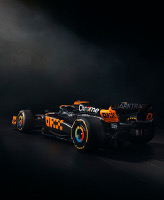
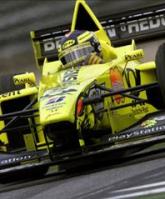
The main difference as I see it is that the golf balls' only means of propulsion is the person in funny clothes with the golf bat who will strike the ball with said golf bat thus determining the velocity of the ball so the ball will need as much help as possible for it to achieve the desired or anywhere near the desired travel distance. An F1 car has an engine in the back that provides a constant source of propulsion. I don't think dimpled F1 cars would be a good idea aerodynamically. Ideally an F1 car will have a small a surface area as possible. Add thousands of dimples and the surface area is going to be increased significantly. Also, I think that dimples would actually cause drag which would slow the car, limit the top speed , increase fuel consumption and increase the amount of fuel to be carried.
The main difference as I see it is that the golf balls' only means of propulsion is the person in funny clothes with the golf bat who will strike the ball with said golf bat thus determining the velocity of the ball so the ball will need as much help as possible for it to achieve the desired or anywhere near the desired travel distance. An F1 car has an engine in the back that provides a constant source of propulsion. I don't think dimpled F1 cars would be a good idea aerodynamically. Ideally an F1 car will have a small a surface area as possible. Add thousands of dimples and the surface area is going to be increased significantly. Also, I think that dimples would actually cause drag which would slow the car, limit the top speed , increase fuel consumption and increase the amount of fuel to be carried.
A source that can explain the aerodynamics of golf balls far better than I can wrote:
Dimpled balls fly farther than non-dimpled balls due to the combination of two effects:
The dimples on the surface of a golf ball cause the boundary layer on the upstream side of the ball to transition from laminar to turbulent. The turbulent boundary layer is able to remain attached to the surface of the ball much longer than a laminar boundary and so creates a narrower, low pressure, wake and hence less pressure drag. The reduction in pressure drag causes the ball to travel farther.
Second, backspin generates lift by deforming the airflow around the ball, in a similar manner to an airplane wing. This is called the Magnus effect. Backspin is imparted in almost every shot due to the golf club's loft (i.e., angle between the clubface and a vertical plane). A backspinning ball experiences an upward lift force which makes it fly higher and longer than a ball without spin. Sidespin occurs when the clubface is not aligned perpendicularly to the direction of swing, leading to a lift force that makes the ball curve to one side or the other. Unfortunately the dimples magnify this effect as well as the more desirable upward lift derived from pure backspin (some dimple designs are claimed to reduce sidespin effects).















 - By hass25